Field Notes: What Storm Damage Really Costs
Every property manager in New Hampshire has seen it — the call after a winter nor'easter or summer hail event. A building inspector arrives to document what the owner already suspects: the roof is compromised, water is finding its way in, and the repair bill just shifted from "eventual" to "urgent."
What makes this pattern so expensive isn't the initial damage. Most roofs survive individual storms. The real cost emerges months or years later, when deferred inspection and preventive work compound into replacements that could have been repairs.
What This Looks Like in Practice

A Worked Example
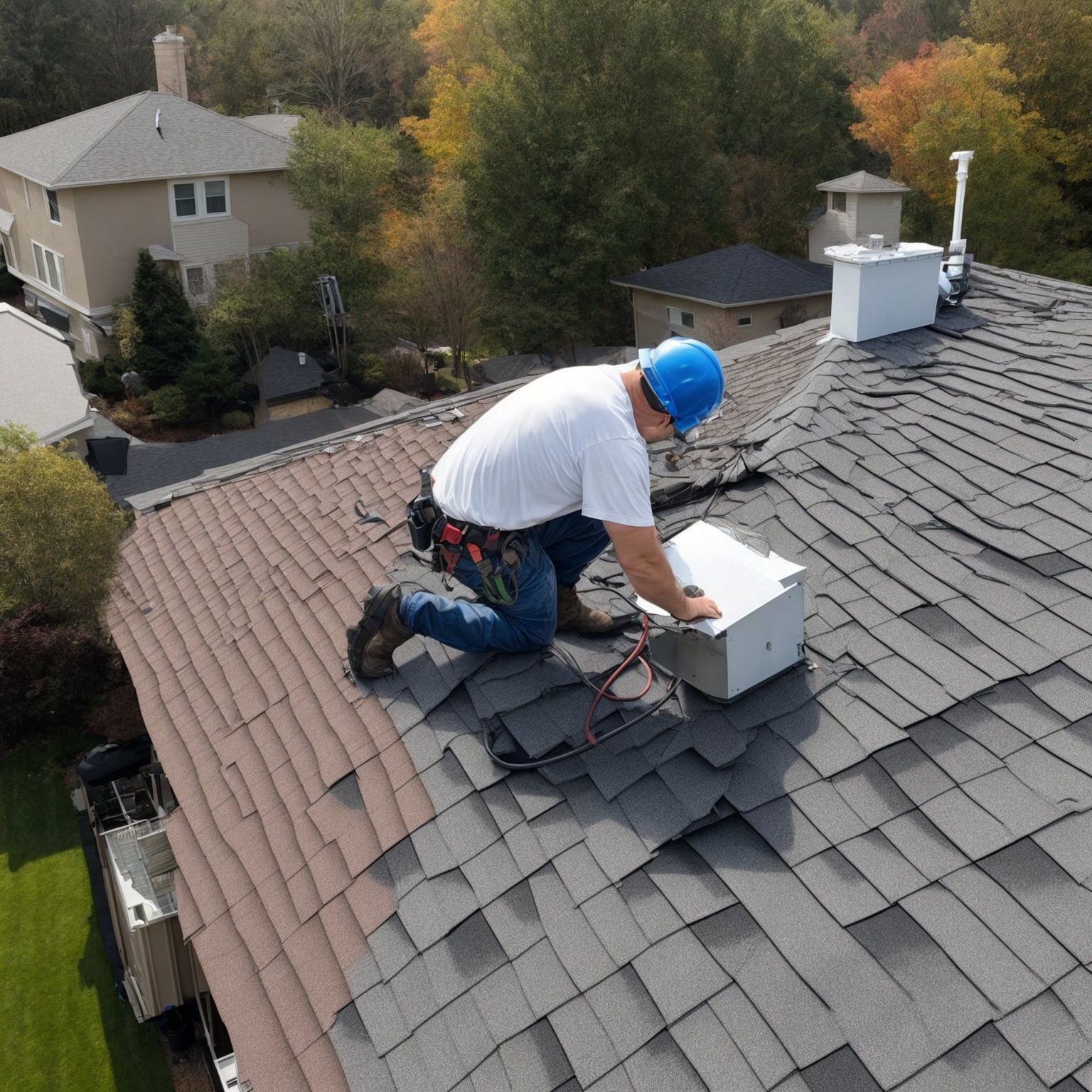
We managed a small commercial property — four units, built 1987, asphalt shingle roof. In 2023, an ice storm peeled shingles off one corner. The owner's insurance adjuster came out, documented maybe $8,000 in damage, and the claim was filed.
What the owner did first (and why it mattered)
We recommended an immediate temporary tarp over the damaged section while the claim was being processed. That 48-hour lag between the damage and the tarp is when water enters the attic cavity. Without the temporary seal, we were looking at drywall saturation and mold risk within days of heavy rain.
The repair itself (the expected piece)
Once approved, the shingle replacement took two days. The contractor worked in sections, pulling damaged shingles, replacing the underlying membrane where it was compromised, and installing new shingles in kind — asphalt, same color, same weight. Cost: right at the $8,000 estimate. Insurance covered it. Done.
The inspection that followed (the part that saved money)
Before closing the claim, we insisted on a full roof inspection by a licensed contractor, not just a visual walkthrough. That inspection found two other sections where the shingles were beginning to separate, a section of flashing that was already failing, and one small area where the underlying decking was showing soft spots. Total additional work: about $3,200 to address while everything was already exposed. Without that inspection, we'd have been looking at another catastrophic event — and another insurance claim — within 18 months.
What the Figures Say
- 70–90%
- The proportion of insured residential catastrophic losses caused by roof-related damage, according to the Insurance Institute for Business & Home Safety.
- 18 months
- Median timeline from initial unaddressed storm damage to structural compromise significant enough to require full replacement instead of repair.
- $8K vs. $35K
- The difference between a targeted repair caught early and a full roof replacement plus underlying structural work, on a typical residential or small commercial property.
The Evidence, Laid Out
Research from the Insurance Institute for Business & Home Safety shows that roof-related damage accounts for an estimated 70–90% of total insured residential catastrophic losses. That is what our advice to inspect after every major storm is built around. The asphalt shingle roofs that dominate New Hampshire's residential and small commercial stock are resilient under normal conditions but vulnerable to wind, hail, and ice events — and vulnerable to overlooked small damage that compounds into major deterioration.
| Event Type | Immediate Visible Damage | Secondary Damage (if uninspected) | Typical Timeline |
|---|---|---|---|
| Winter ice storm | Shingle separation, flashing lift | Membrane saturation, decking rot | 4–8 months |
| Summer hail event | Shingle granule loss, small punctures | Accelerated deterioration, interior water intrusion | 12–18 months |
| Wind damage (sustained 40+ mph) | Shingle cupping, edge peeling | Underlayment exposure, moisture penetration | 3–6 months |
| Tree limb contact or loading | Localized puncture or abrasion | Membrane breach, concentrated water intrusion | 2–4 months |
These timelines assume typical New Hampshire weather conditions and indoor humidity levels. Properties in high-humidity or poorly ventilated spaces may compress these timelines by 30–50%. |
|||
Roof Installation Steps: A Video Guide
For property managers new to roof assessment or replacement, this step-by-step guide walks through the roof installation process from start to finish. It is particularly useful if you want to understand what your contractor should be doing at each stage and recognize quality workmanship when you see it.
The Recommendation We Make
We recommend a professional roof inspection after every weather event that produces hail, heavy wind, or ice loading — not in six months when you remember, but within 48 hours. That is not alarmism; it is the difference between a manageable $5,000 repair and an unexpected $40,000 replacement.
Need a Professional Assessment?
Our team connects property owners and managers with licensed contractors who have the expertise to spot damage before it compounds into structural failure.
Get in Touch